
Food Allergies or Food Intolerances? The Confusion Is Common — and It Matters
Whether you’re dining on fresh seafood along Tybee Island’s oceanfront, enjoying the food scene in historic downtown Savannah, or grabbing a bite after a day exploring the Wilmington Island waterway, reacting to a meal can be alarming. But is what you’re experiencing a dangerous food allergy — or a less serious food intolerance?
The distinction is critically important. One can become life-threatening in minutes. The other, while uncomfortable, generally resolves on its own. Across the Savannah, Georgia metro area, the team at Your Family Urgent Care — with clinics serving Berwick, Sandfly, and Wilmington Island — sees patients regularly who aren’t sure which they’re dealing with.
This guide cuts through the confusion, corrects dangerous myths, and helps you know exactly when to walk into one of our clinics or call 911.
What Is a Food Allergy?
A food allergy is fundamentally an immune system problem. According to the Mayo Clinic, a food allergy occurs when the body’s immune system mistakenly identifies a specific food or ingredient as something harmful and mounts a defense against it. This overreaction triggers the release of chemicals — including histamine — that produce allergy symptoms throughout the body.
As explained by Dr. Adela Taylor, allergist and immunologist at Mayo Clinic, the immune system produces antibodies that identify food as harmful, triggering the release of other chemicals that cause an allergic reaction.
The Nine Major Food Allergens
According to the Cleveland Clinic, nine foods account for the vast majority of food allergies in the United States: milk, eggs, peanuts, tree nuts, wheat, soy, fish, shellfish, and sesame. These foods are responsible for the great majority of serious allergic reactions and are required by federal law to be clearly labeled on packaged foods.
IgE-Mediated Reactions
Most classic food allergies are what clinicians call IgE-mediated — meaning the immune system produces a specific antibody called immunoglobulin E (IgE) in response to a food protein. When you encounter that food again, these IgE antibodies trigger the release of chemicals that produce allergy symptoms. This process can happen within seconds to minutes of exposure.
In the Savannah, GA area — particularly during coastal dining experiences where shellfish and fish are abundant — IgE-mediated shellfish allergies are among the most common serious allergic reactions our clinicians treat.
What Is Food Intolerance?
Food intolerance — sometimes called food sensitivity — is very different from an allergy. The Cleveland Clinic explains that food intolerance means your gut is sensitive to certain foods and cannot tolerate them, causing uncomfortable symptoms that are not life-threatening.
The critical distinction: food intolerance does not involve the immune system. Instead, as the Mayo Clinic Health System notes, an intolerance means your body does not have the correct mechanisms to digest certain foods properly.
Common Food Intolerances
The most prevalent food intolerance is lactose intolerance — difficulty digesting lactose, the sugar found in dairy products. The Mayo Clinic Health System notes that by adulthood, a degree of lactose intolerance develops in the vast majority of persons with African, Asian, Hispanic, and American Indian descent. Other common intolerances involve gluten sensitivity (distinct from celiac disease), food additives like MSG, and certain natural food chemicals.
Key difference to remember: food intolerances cause discomfort — mostly digestive — but they are not life-threatening. Food allergies can trigger anaphylaxis, a potentially fatal immune response. This difference should determine the urgency of your response.
Recognizing the Symptoms: Allergy vs. Intolerance
Symptoms of food allergies and intolerances can overlap — both may cause stomach upset, for example — but food allergies bring a broader, more severe range of reactions that extend well beyond the digestive system.
Food Allergy Symptoms
- Hives, itching, or eczema
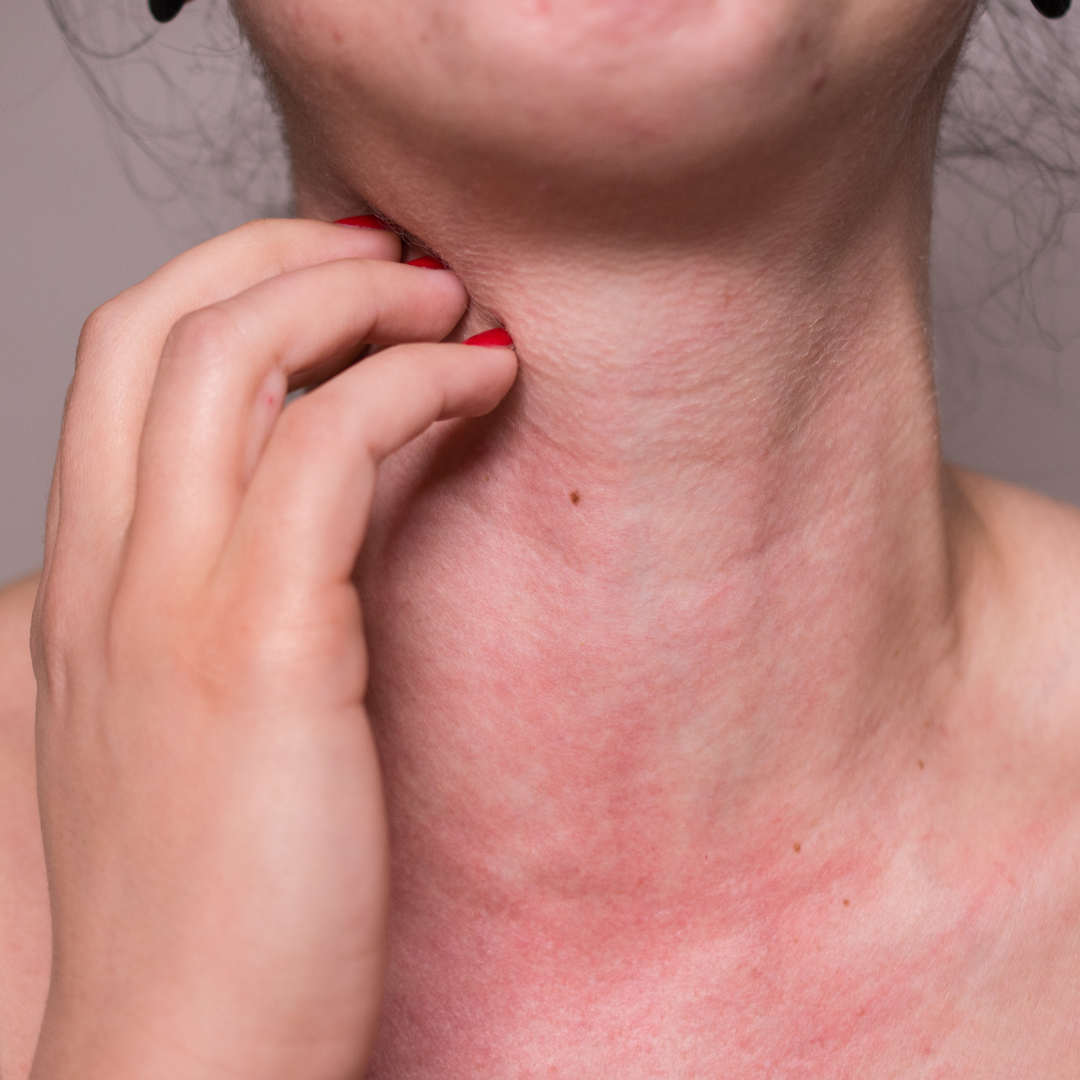
- Swelling of the lips, face, tongue, or throat
- Wheezing or difficulty breathing
- Runny nose and sneezing
- Nausea, vomiting, or diarrhea
- Abdominal pain or cramping
- Dizziness, lightheadedness, or fainting
- Drop in blood pressure (anaphylaxis)
- Loss of consciousness
Food Intolerance Symptoms
- Gas and bloating
- Diarrhea
- Stomach cramping or pain
- Nausea
- Heartburn or acid reflux
- Headaches (in some cases)
- Feeling generally unwell
- Symptoms may appear hours or even days after eating
Anaphylaxis — Call 911 Immediately
According to the Cleveland Clinic, food allergies can cause anaphylaxis — a severe reaction that can cause swelling in your airways or a dangerous drop in blood pressure. If someone has facial or throat swelling, difficulty breathing or swallowing, or feels faint after eating, call 911 immediately. Do not drive to urgent care — call for emergency services.
Timing Is a Clue
One practical way to distinguish the two is the timing of symptom onset. Research published in a Mayo Clinic-affiliated study describes the classic presentation of a food allergy as immediate onset of symptoms, typically within 5 to 60 minutes after ingestion. By contrast, food intolerance symptoms can appear hours or even days after consuming the food. However, timing alone is not a definitive diagnostic tool and should never be used to self-diagnose.
Food Allergy Facts vs. Myths
Misconceptions about food allergies are widespread and can have dangerous consequences. Here are the most common myths — and the evidence-based facts behind them.
Myth: Food allergies are just an inconvenience — not a real medical threat.
Fact: Food allergies can be life-threatening. According to FARE (Food Allergy Research & Education), food allergies can cause hives, coughing, swelling of the face and tongue, difficulty breathing, and loss of consciousness. They are not only life-threatening — they are also life-altering, requiring constant vigilance in daily life.
Myth: A small amount of an allergen won’t cause a serious reaction.
Fact: Even a trace amount of a food allergen can trigger anaphylaxis in susceptible individuals. This is why cross-contamination — such as shared cooking surfaces or utensils — is taken very seriously by people managing food allergies and the restaurants that serve them.
Myth: Antihistamines like Benadryl can stop an allergic reaction.
Fact: Antihistamines can help relieve mild symptoms like itching, but they do not stop anaphylaxis. Epinephrine (an EpiPen) is the only approved medication to stop a severe anaphylactic reaction and should be administered first and fast. After using epinephrine, the patient still needs emergency evaluation.
Myth: You can never outgrow a food allergy.
Fact: Many children do outgrow certain food allergies. Mayo Clinic research indicates that 60–80% of children outgrow egg or milk allergies before reaching age 16. However, allergies to peanuts, tree nuts, fish, and shellfish are significantly less likely to be outgrown.
Myth: If you don’t react within 30 minutes, you’re safe.
Fact: Symptoms can appear anywhere from seconds to 2 hours after exposure. Additionally, a biphasic reaction can occur — a second wave of symptoms 1 to 48 hours after the initial reaction, even without further allergen exposure. This is why medical observation after a known allergic reaction is important.
Myth: Avoiding allergenic foods in infancy prevents food allergies.
Fact: This is now considered outdated guidance. Dr. Sandra Hong, chair of allergy and immunology at the Cleveland Clinic, notes that current evidence shows early introduction of common allergens may actually reduce the risk of developing allergies in high-risk infants.
Myth: Each allergic reaction will be worse than the last.
Fact: Allergic reactions are unpredictable. A mild reaction one time does not mean the next will be mild — and a severe reaction doesn’t guarantee subsequent ones will be equally severe. This unpredictability is why people with known food allergies should always carry epinephrine and never assume a past reaction predicts the future.
Myth: Food allergies and food intolerances are the same thing.
Fact: These are distinct conditions with different mechanisms, symptoms, and risk profiles. Allergies involve the immune system; intolerances do not. Allergies can be life-threatening; intolerances are not. Confusing the two can lead to dangerous under-treatment of a true allergy.
How to Determine If It’s an Allergy or Intolerance
Self-diagnosis is unreliable and potentially dangerous. The symptoms of both conditions can overlap, and what seems like a mere intolerance could be an undiagnosed allergy. The path to clarity involves a proper medical evaluation.
The Diagnostic Process for Food Allergies
According to the Mayo Clinic Health System, a proper food allergy diagnosis begins with a detailed medical history and physical examination, followed by one or more of the following steps.
Step 1. Detailed Medical History: Your provider will ask about your symptoms, their timing, which foods are suspected, and your family history. This is the most critical component of the evaluation.
Step 2. Skin Prick Test: A small extract of the suspected food is placed on the skin and introduced with a tiny prick. A raised bump within 15 to 30 minutes suggests sensitization. This test has a high negative predictive value of approximately 90%.
Step 3. Blood Test (Specific IgE): A blood draw measures the level of IgE antibodies your immune system has made in response to a specific food. This test is most useful in patients with a history that suggests an IgE-mediated food allergy.
Step 4. Oral Food Challenge: The gold-standard test — a controlled, supervised ingestion of a suspected allergen in increasing amounts. This is conducted in a clinical setting where anaphylaxis can be treated if it occurs.
An important note: as Dr. Scott Sicherer, pediatric allergist at Mount Sinai, emphasizes, an allergy test alone does not determine whether a true allergy exists — diagnosis requires a full evaluation by a qualified provider. Broad food panel allergy testing without a clinical history to guide it is not recommended.
Identifying a Food Intolerance
The Mayo Clinic Health System recommends keeping a detailed food journal — recording what you eat and noting when symptoms appear — as an important first step in identifying food intolerances. An elimination diet, which involves removing suspected foods and then reintroducing them one by one, can also help pinpoint the trigger. Always work with a healthcare provider before undertaking an elimination diet, as it can inadvertently affect nutrition.
When & Where to Seek Care Near Savannah, GA
Knowing when to act — and where to go — can save a life. The Savannah area’s unique geography, from downtown’s historic squares to the coastal communities of Tybee Island and Wilmington Island, means that access to fast, knowledgeable urgent care is essential.
Go to the Emergency Room or call 911 immediately if you experience:
difficulty breathing or swallowing, swelling of the face, lips, mouth, or throat, a severe drop in blood pressure, dizziness or fainting, or any symptom of anaphylaxis. Do not drive yourself. If an epinephrine auto-injector (EpiPen) is available, use it first — then call 911.

Come to Your Family Urgent Care if:
You’ve had a moderate allergic reaction and it’s resolving. Hives, mild itching, or mild stomach upset after a known or suspected food allergen — especially if it’s your first reaction. Our clinicians can evaluate you, discuss testing options, and refer you to an allergist.
You’re experiencing digestive symptoms that concern you. Persistent bloating, diarrhea, stomach pain, or discomfort after eating. We can help rule out more serious conditions and discuss whether a food intolerance evaluation is appropriate.
You’re unsure whether you have an allergy or intolerance. Our experienced providers in Berwick, Sandfly, and Wilmington Island can take a thorough history, discuss diagnostic options, and coordinate appropriate testing or referrals — all with no appointment needed.
You need a prescription or referral. If your history suggests a true food allergy, our providers can prescribe epinephrine auto-injectors, antihistamines, and coordinate referrals to allergy specialists in the greater Savannah area.
You have concerns about your child. Children in the Savannah, Sandfly, and Tybee Island area who have reacted to a food need proper evaluation. Our pediatric care services provide compassionate, expert assessment for kids of all ages. Food allergies in children should never be dismissed as just a stomachache.
Your Family Urgent Care serves Berwick, Sandfly, and Wilmington Island — walk-ins always welcome, no appointment needed. Voted Best Urgent Care in Savannah by Savannah Magazine, 2025.